Stop Fearrington Preserve
What is Smart Chatham? We are a non-partisan coalition of neighborhood associations (Briar Chapel, Fearrington Village, Kentview North/South, Morris Road, Parker Herndon Road, Andrews Store Road, Polks Landing), parents, and environmental stewards. We support smart, policy-compliant growth. We oppose the 2026 Fearrington Preserve proposal because it exploits county ordinances, threatens local watersheds, overcrowding school corridors, and bypasses public due process.
5.77 Units/Acre
Net Pod Density
109+ Acres
Canopy Clear-Cut
Toxic Land
Concealed Reports
4 Schools
Negatively Impacted
STAY INFORMED
CORE DENIAL ARGUMENTS
The Four Strategic Policy Pillars
Four technical, environmental, and legal reasons why the Planning Board must recommend DENIAL.
Pillar 1 — Due Process & Lack of Transparency
Procedural Defects, Defective Notice & The Secret NDA
- 100+ Pages of Late Overhauls: Submitted across open hearing sessions, introducing major structural modifications that bypass required re-reviews by the Technical Review Committee (TRC) and Appearance Commission.
- Secret County NDA: Cloaks site-wide technical, environmental, and site suitability studies covering the entire property, violating public inspection principles under N.C.G.S. § 160D-602 and state public records law (N.C.G.S. Chapter 132).
- N.C.G.S. § 160D-602 Notice: Evaluating a "moving target" application with un-noticed, substantially different plans renders original statutory notice legally defective under the Substantial Changes Rule established by the NC Supreme Court in Heaton v. City of Charlotte and NC Court of Appeals precedent in Thrash v. County of Buncombe.
Impacts: Neighboring Property Notice & Constitutional Rights
Pillar 2 — Ordinance Exploitation
Double Density Without Compliance
- 77% Commercial Town Center Slash: Cuts required 100,000 sq. ft. walkable village down to ~23,000 sq. ft. (or 0 if converted to townhomes).
- 50% Viewshed Buffer Cuts: Shrinks required roadside buffers along Parker Herndon and Morris Roads from 100 ft to 50 ft.
- Extreme Net Pod Density (5.77 Units/Ac Net): Concentrates 630 homes into 5 disconnected pods separated by streams, lacking internal walkability.
Impacts: Parker Herndon Rd, Morris Rd & Compact Ordinance Rules
Pillar 3 — Environmental Hazards
Flooding, Forest Loss & Wastewater
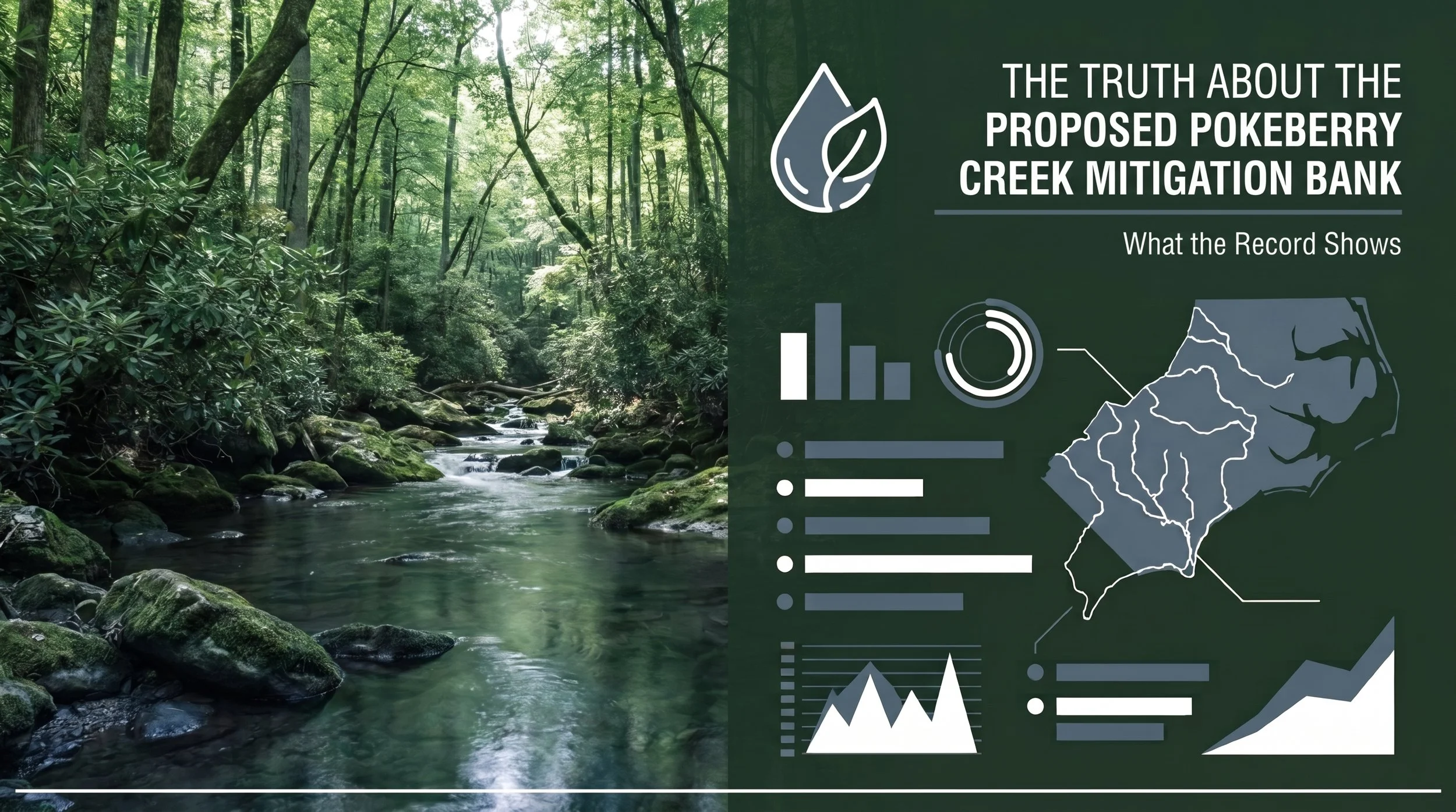
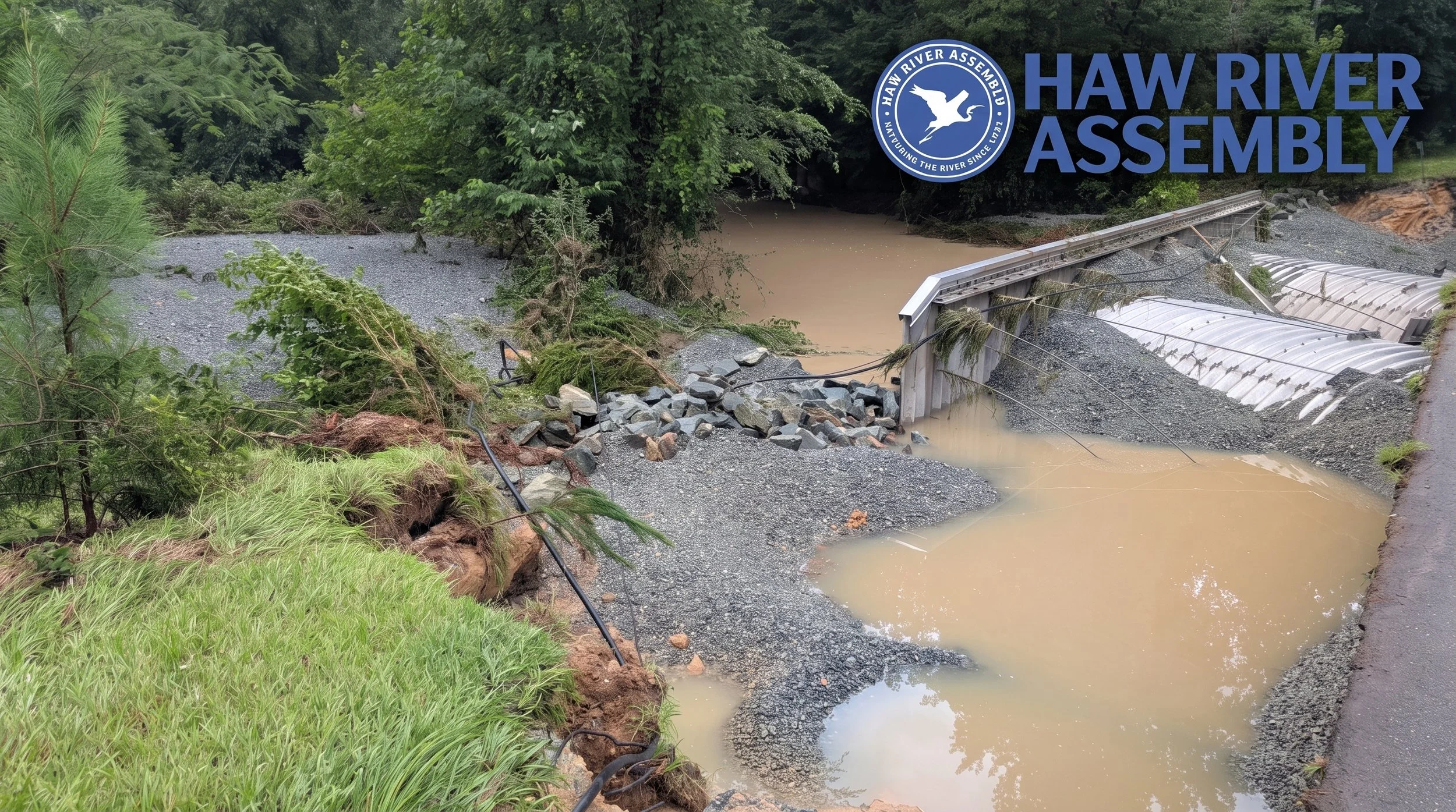
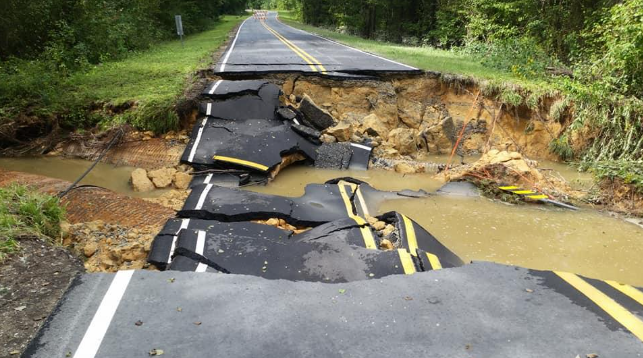
- Outdated FEMA Maps & Bridge Washouts: Relies on inaccurate flood boundaries on Pokeberry Creek—a stream that has washed out Morris Rd bridges twice in 7 years.
- 109+ Acres Clear-Cut: Destroys mature forest canopy, accelerating peak stormwater runoff and soil erosion into local waterways.
- Off-Site Sewer Barred & Remediation Failure: Zoning Staff confirmed off-site sewer to Fearrington Place is prohibited. Furthermore, stream restoration fails without Briar Chapel access easements.
Impacts: Kentview Dr, Morris Rd & Pokeberry Creek Watershed
Pillar 4 — Safety & Traffic
Traffic Gridlock & School Corridors
- Failing Level of Service (LOS E & F): TIA projects failing intersections on narrow two-lane rural collector roads.
- 4 Local Schools Impacted: Dumps traffic from 630 homes directly onto pickup/drop-off routes for Pollard Middle, Chatham Grove Elementary, Woods Charter and Willow Oak Montessori.
- Unstudied Roundabouts & Bus Safety: Inserts unapproved roundabouts on Andrews Store Rd and lacks guaranteed internal bus turnaround loops in every pod.
Impacts: Andrews Store Rd, Parker Herndon Rd & School Corridors
We are calling on the applicant, Fearrington Property Development, LLC to publicly answer three basic questions before any final county vote:
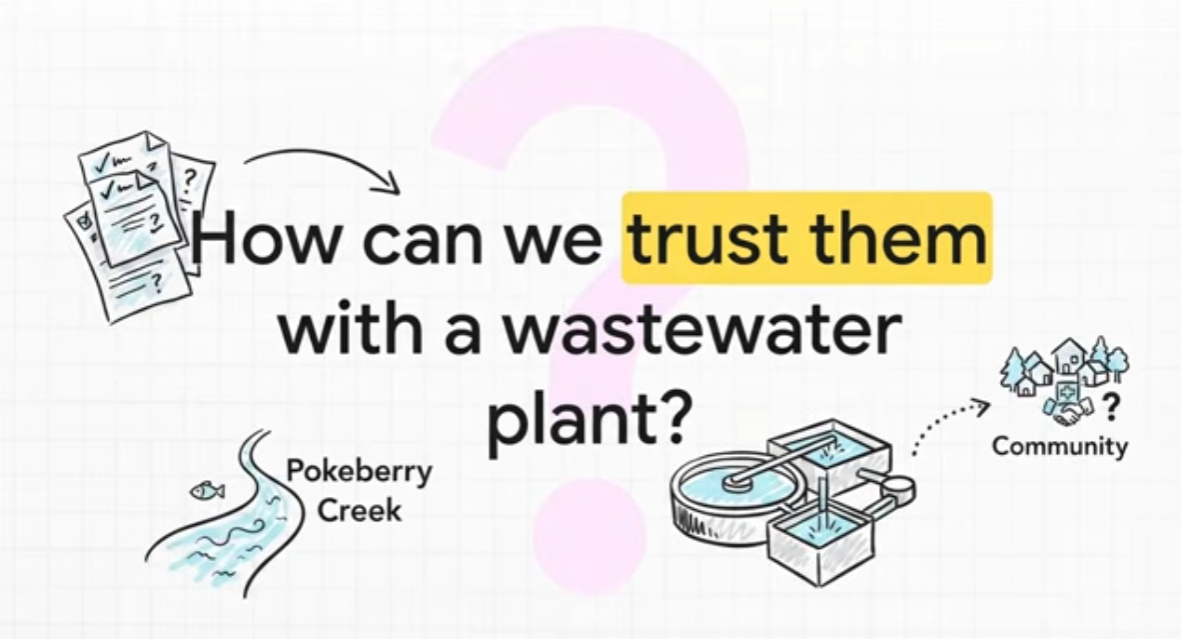
1️⃣ Full Disclosure of Business Relationships: Does Fearrington Property Development, LLC, or its principals hold any profit-sharing agreements, joint-venture structures, or success-fee arrangements with Vivus Viridis, LLC or Pokeberry Mitigation, LLC?
2️⃣ Credit Revenue Transparency: What is the anticipated commercial yield from selling stream and wetland mitigation credits on this property, and how are those proceeds divided?
3️⃣ Public Risk Allocation: If downstream stream structures fail or run into long-term performance issues from storm runoff caused by high-density construction, who assumes the financial burden for long-term repairs?